
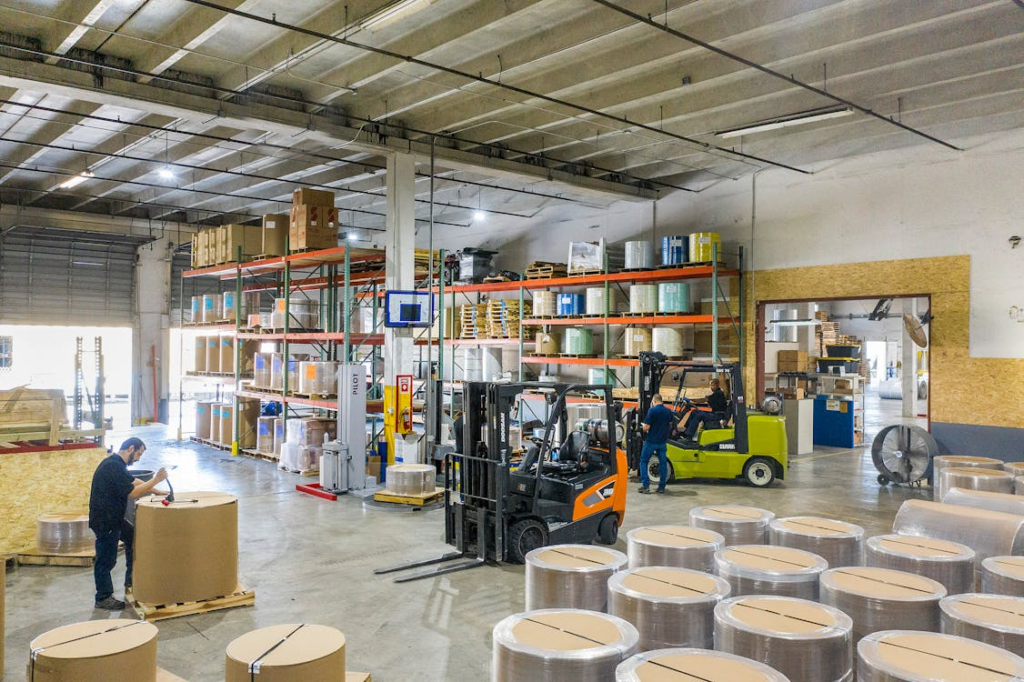
At some point, every booming business reaches a wall.
The garage is full, the extra bedroom is littered with boxes of inventory and orders are backing up faster than they can be filled. Sounds about right?
Transitioning from a garage to a legitimate distribution center is one of the most significant steps your business will ever take. Naturally, it’s an exciting time. But it’s also where most entrepreneurs get lost.
Here’s the good news.
With modular warehouse construction, the transition doesn’t have to be scary. In fact, it can be one of the wisest business decisions you’ll ever make.
Let’s take a look…
Summary
- Why Running Out of Room Means Your Business is Growing
- Understanding Modular Warehouse Construction
- How To Effectively Plan For the Transition
- Mistakes Others Make With The Warehouse Transition
Why Running Out of Room Means Your Business is Growing
Short on space is a good problem to have. It means your business is taking off.
Staying in that cramped space for too long is where things start to go downhill. Incoming orders pile up. Your inventory gets damaged. And customers stop trusting you.
Warehouse demand has sky-rocketed over the last few years. Rent and inflation have slowed new construction to a trickle. As of February 2025, only 585 warehouses entered the US building stock. To put that into perspective, there were over 2x as many warehouses completed in 2022.
What does that mean for your business?
Warehouse space has never been harder to build or more expensive to rent. That’s precisely why modular warehouse construction has boomed in recent years. It allows businesses to custom-tailor a space for their specific needs without the absurd costs and time commitments of traditional construction.
Don’t underestimate utilizing vertical space by adding a quality mezzanine floor from a trusted warehouse mezzanine supplier either. Mezzanine floors are one of the most cost-effective ways to double your storage capacity within an existing warehouse.
Smart thinking ahead of time can save you loads of headaches down the road.
Understanding Modular Warehouse Construction
Modular warehouse construction sounds a lot more confusing than it actually is.
Building modular means that sections of the warehouse are pre-engineered and constructed off-site in a factory. Then they get shipped over and assembled on-site.
You might be wondering why that’s important.
Construction timelines for traditional warehouses take months, if not years. A modular warehouse can be assembled in up to 50% less time.
When you’re growing that quickly, you don’t have the luxury of waiting 1+ years to get more space.
Not only is the process faster, but it also comes with:
- Cost savings – labour costs, material waste, and time are a few ways you’ll save money with modular
- Flexible – build it out how you need it today and expand later. Don’t worry about guessing what you’ll need in the future
- Quality – modules built in a factory are constructed with precision. You don’t have to worry about whatever contractor you hire
Modular warehouse construction gives growing businesses the chance to scale up. Without the crazy expense of permanent warehouse builds.
How To Effectively Plan For the Transition
Transitioning from a garage to warehouse is easy if you know what you’re doing. No, really. Here’s what you need to do…
Analyze your current operation
Take a good look at your garage. Where are you slowing down? Where’s stuff getting damaged? How much inventory are you storing at any given time?
Figuring out your operation’s bottlenecks will help you determine how big your warehouse needs to be and what it should look like. Don’t guess. Look at your previous 6–12 months of sales data.
Define your space requirements
Now that you know the problems you want to fix, you can figure out how much space you’ll need to fix them. Keep in mind:
- How much inventory you’re storing or will be storing
- Enough room to grow for at least 2–3 years
- Picking and packing/selling areas
- Administrative offices
Remember: you can always add more space later with modular construction.
Pick a Location
Where you put your warehouse is critical. Think about access to suppliers, shipping access, and even where your customers are located. Zoning laws and permits should also be considered.
Picking the wrong location can cost you thousands in inefficient shipping costs.
Partner with the right company
Partnering with the right construction company can set you up for success or cause a world of pain. Make sure you research who you want to partner with and read reviews from past customers.
A modular warehouse construction company should be able to walk you through your options and help you design the perfect warehouse.
Mistakes Others Make With The Warehouse Transition
Believe it or not, there are entrepreneurs out there who have already been through this process.
And as you could probably guess, many of them failed to plan and ended up making some pretty costly mistakes.
Here are the biggest ones:
Not leaving room for growth
It happens all the time. Businesses plan for today what they need and completely forget about the future. But if your business is growing enough to need a warehouse, it’ll probably continue growing.
Always build with tomorrow in mind.
Forgetting about vertical space
Square footage is the first thing most people think about when moving into a warehouse. But vertical space is equally important. Look into mezzanine storage, taller storage racks, you name it.
Not getting the proper permits
Building codes and permits will vary from city to city. Don’t neglect this just because you think it’ll be a headache. Get the proper permits beforehand.
Oversizing
On the complete opposite side of the spectrum, don’t plan for too much space. That just opens you up to renting a giant facility that you’ll never use.
Modular warehouse construction can alleviate this problem since you can always add on later.
Final Thoughts
Transitioning from a garage to a distribution center is something every booming business should be thrilled about.
Congratulations, your business is growing! But that growth comes with new obstacles. Obstacles that can be easily avoided with a little forward planning.
If you remember anything from this article, let it be this:
- Analyze current business needs
- Define space requirements
- Find a good location
- Partner with the right construction company
- Don’t make the mistakes others did
Businesses that take their time planning this crucial transition will be set up to win for years to come. Those who rush into it? They’ll be shopping for another warehouse in 12 months.
Take your time. Your business depends on it.