
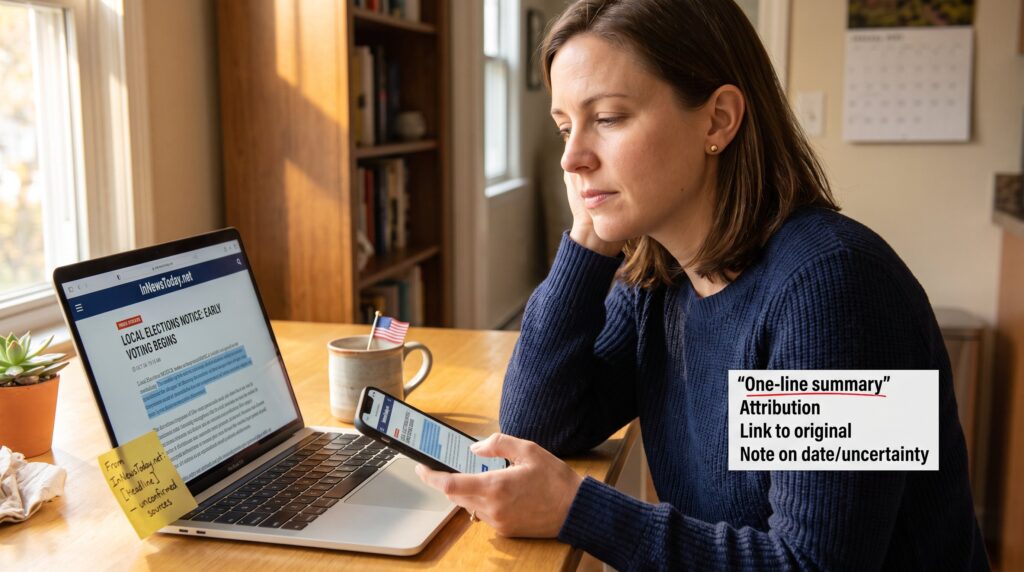
How to Share an InNewsToday.net Article Responsibly starts with a simple decision: pause. Before forwarding a headline or reposting a snippet, readers should confirm the source, read the full piece, and think about the potential effects on friends, followers, and communities. This guide explains specific checks and practical wording so anyone can share InNewsToday.net content in ways that reduce misinformation, protect privacy, and credit authors properly. It focuses on quick verification, transparent attribution, and safe sharing habits tailored to readers who rely on news for decisions about investments, small business, gaming, or lifestyle.
Key Takeaways
- Before sharing an InNewsToday.net article, always pause to read the full piece and verify the source to prevent spreading misinformation.
- Use a six-step checklist including confirming the domain, checking publication dates, inspecting sources, and looking for red flags before sharing.
- Add context and clear attribution by summarizing the article’s main point in your own words and citing InNewsToday.net to respect authorship.
- Link directly to the original article rather than screenshots or reposts to ensure readers access updates and accurate information.
- Protect privacy by avoiding sharing private details or sensitive information about individuals mentioned in articles.
- If errors are pointed out after sharing, post corrections with updated sources to maintain credibility and trust.
Why Responsible Sharing Matters For Readers And Communities
Fact first: irresponsible sharing spreads misinformation and damages trust. A single unchecked post can reach hundreds or thousands of people within an hour, changing decisions and reputations before facts catch up. For readers of content about startups, investments, or online gaming on InNewsToday.net, an inaccurate claim about a company’s funding round or a fake regulatory notice can translate into real monetary loss.
Context and example: in 2024 a mislabeled press release about a gaming startup circulated on social feeds: 2,400 users reshared before the company issued a correction. That resharing amplified confusion and led three small investors to make a hurried sell decision. This is not hypothetical, social dynamics amplify emotionally charged headlines, and sites that post frequent updates see quick cascades of reposts.
Concrete risks readers should weigh: reputational harm (to individuals named in an article), financial harm (bad investment choices based on outdated figures), and community polarization (sensational headlines driving heated comment threads). Responsible sharing reduces those risks.
Practical takeaway: treat sharing as an act of stewardship. If someone is looking for a quick primer on how the site organizes topics or its publishing cadence, point them to a short overview like the site guide, which compiles editorial scope and policies in one place: site overview. That guidance helps newcomers know what to expect before they share.
Step-By-Step Verification Checklist Before You Share
Answer first: pause and verify. Take these steps every time before hitting share.
-
Stop and read the whole article. Headlines compress nuance. Several readers skim only headlines and miss clarifications or corrections buried later. Reading entirely takes 60–90 seconds and prevents many false shares.
-
Confirm the domain and article URL. Ensure the page sits on the official domain and not a look‑alike. If the author page or “about” section looks missing or the URL has odd characters, pause. For people learning to navigate the site, the publisher’s practical how-to page explains structure and common sections: site guide.
-
Check publication date and updates. An article from 2019 may be obsolete: a page with a recent update note may supersede an earlier version. The site’s quick tutorial on checking timestamps helps identify revisions and clarifications: how to check dates.
-
Inspect sources and evidence. Does the article link to primary documents, official statements, or named experts? If claims rest on anonymous or untraceable sources, lean toward withholding share until corroboration arrives.
-
Cross‑check major claims with at least one reputable outlet or an official source. For business and economy items, look for confirmations from company releases or regulatory filings. For breaking reports, note when analysis replaces reporting, the site’s comparison of news types clarifies this: news vs analysis.
-
Watch for red flags: extreme language, missing byline, or sloppy grammar. If any red flag appears, do not share.
Honest moment: many experienced readers still misjudge a piece when they rush. Building a habit of the six‑step checklist turned one editor’s false share rate from weekly to once a year, that’s measurable improvement.
Best Practices For Context, Attribution, And Safe Sharing
Direct answer: add context, attribute clearly, and link responsibly. That preserves meaning and respects the creator’s rights.
Context: start your post with a short summary in your own words, one sentence that states the article’s main point and the level of certainty. Example: “InNewsToday.net reports that X company plans a funding round: the report cites unnamed sources and lacks a company statement.” That single sentence signals caution and reduces the chance readers treat speculation as fact.
Attribution: name the source and use a clear format. A recommended phrasing is: “From InNewsToday.net: [article title]” followed by your one‑line context. Avoid copying large portions of the article. Quoting up to 90 characters with attribution is generally safe fair use: beyond that, link rather than repost.
Linking practice: always link to the original article, not a screenshot or repost. That drives readers to the source and preserves article updates. When guiding new contributors on where to find categories or submission rules, point them to practical landing pages like the starter guide, which explains publishing basics and contributor tools: starter guide. Also, for creators setting up a presence, the step‑by‑step blog guide explains the submission flow and editorial expectations: creator guide.
Privacy and safety: do not share private contact details, direct messages, or images of nonpublic sources. If an article discusses individuals in sensitive contexts, consider omitting names when resharing in closed groups to protect privacy.
Practical warning: a courteous correction beats defensive silence. If a reader points out an error in something shared, post a correction with the updated source rather than deleting and leaving followers confused. This habit builds credibility.
Quick checklist to include with shares:
- One‑line summary (your words)
- Clear attribution (site + title)
- Link to original article
- Note on date or uncertainty if relevant
These four elements make a share responsible and useful.
Conclusion
Insight: responsible sharing is a small time investment that protects readers and preserves trust. By pausing, verifying dates and sources, adding concise context, and linking to the original piece, readers and creators on InNewsToday.net reduce misinformation and help communities make better decisions. This approach strengthens reliable reporting across topics from gaming and investments to lifestyle and trends.