
International travel has changed dramatically in the smartphone era. Travelers no longer rely solely on paper maps, hotel information desks, or physical guidebooks. A single phone can now handle navigation, translation, reservations, payments, communication, entertainment, and access to breaking news from almost anywhere.
But all of those conveniences depend on one thing: a reliable internet connection. This is one reason travelers are increasingly exploring digital alternatives to traditional SIM cards. For anyone comparing options before an international trip, researching the best travel eSIM can be an important part of preparing for life abroad.
The shift is more than a small change in smartphone hardware. It reflects a broader transformation in the way technology is removing friction from travel. With an eSIM, travelers can potentially arrange mobile connectivity before leaving home, avoiding some of the practical difficulties associated with purchasing and installing a physical SIM after landing.
What Is an eSIM?
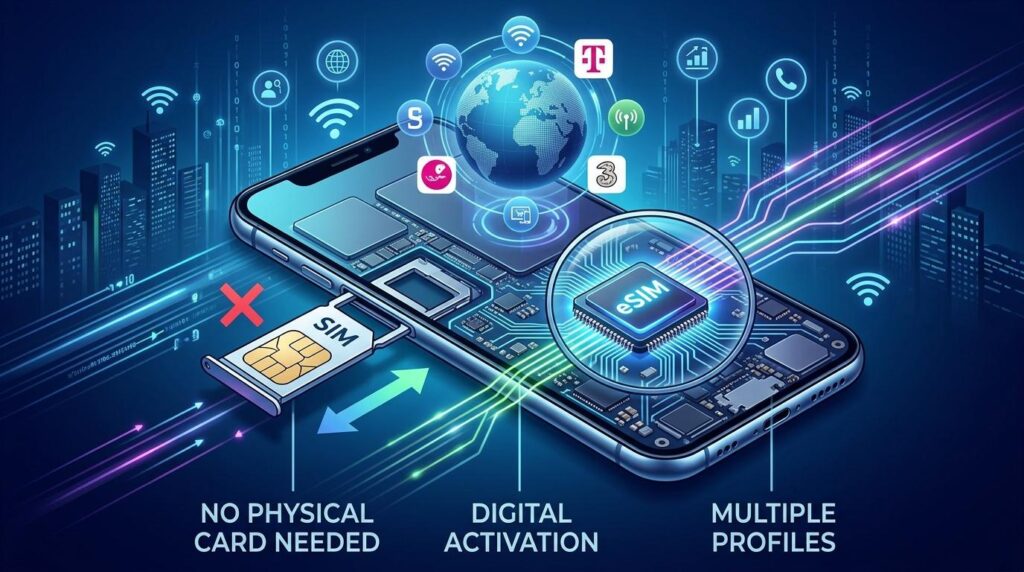
An eSIM, or embedded SIM, is a digital version of the subscriber identity module traditionally found as a removable plastic card inside a phone.
Instead of physically replacing a SIM card, compatible devices can download and activate a mobile plan digitally. Depending on the device, carrier, and destination, users may be able to store multiple cellular profiles and switch between them when necessary.
This can be particularly useful for people who travel between countries. Rather than carrying several tiny SIM cards or trying to remember which one belongs to which destination, travelers can manage compatible plans directly through their device.
The technology is becoming part of a larger movement toward digital-first services. Banking, airline boarding passes, hotel reservations, transportation tickets, and now mobile connectivity can all be managed through a smartphone.
Why Connectivity Has Become a Travel Essential
A smartphone without internet access can still perform many functions, but international connectivity significantly expands what travelers can do.
Consider a typical day abroad.
A traveler might use a maps application to find a train station, check a translation tool while ordering food, send a message to a hotel, confirm a reservation, look up public transportation, and make a digital payment.
Each activity may seem insignificant on its own. Together, however, they demonstrate how dependent modern travel has become on connected devices.
Connectivity can also matter when plans change unexpectedly. A canceled train, delayed flight, unfamiliar road closure, or sudden change in accommodation can require immediate access to information.
For business travelers, the stakes can be even higher. A stable connection may be necessary for email, cloud-based documents, video meetings, authentication codes, and communication with colleagues.
The Problems With Traditional SIM Cards
Physical SIM cards have served mobile users for decades, but international travel can make them inconvenient.
Travelers may need to find a local mobile store after arriving in a new country. They may need identification documents, compatible devices, or assistance understanding unfamiliar plans.
There is also the physical problem.
Removing a SIM card requires a small tray or tool on many devices. The original card then needs to be stored somewhere safe so it does not get lost during the trip.
For people visiting multiple countries, this can become increasingly cumbersome.
An eSIM removes much of that physical handling. Instead of inserting a new piece of hardware, compatible phones can use software-based activation.
The Convenience of Setting Up Connectivity Before Departure
One of the most useful aspects of eSIM technology is the possibility of preparing connectivity before a journey begins.
Rather than arriving at an airport and immediately searching for a mobile shop, travelers can potentially install a compatible plan ahead of time.
That preparation can be especially useful when the first destination is unfamiliar.
Imagine arriving after a long flight. You need to reach your hotel, but you don’t know the local transportation system. Having mobile data already configured can make it easier to open a map, contact accommodation, check directions, or research transportation options.
The important point is not that every traveler needs an eSIM. Compatibility, coverage, pricing, data limits, and activation requirements vary. The value comes from having another option for managing connectivity.
How eSIMs Fit Into the Modern Travel Experience
Travel technology increasingly revolves around reducing small points of friction.
Airlines have moved toward digital boarding passes. Hotels increasingly allow mobile-based communication and digital check-in. Navigation applications have reduced dependence on printed directions. Translation technology can help bridge language barriers.
eSIM technology fits naturally into this ecosystem.
Connectivity becomes something that can be configured digitally rather than something that requires a physical transaction.
That distinction may sound minor, but convenience often comes from eliminating several small inconveniences rather than solving one enormous problem.
For frequent travelers, these improvements can accumulate over time.
What Travelers Should Check Before Choosing an eSIM
An eSIM should not be selected simply because it is digital. Travelers should examine the details of a plan before purchasing or activating it.
1. Device Compatibility
Not every phone supports eSIM functionality.
Compatibility can depend on the exact device model, regional version, and sometimes the carrier configuration. Travelers should verify that their smartphone supports eSIM before purchasing a plan.
2. Destination Coverage
An eSIM plan may cover one country, several countries, or a broader region.
Someone visiting France for a short vacation has different requirements from someone traveling through several European countries over multiple weeks.
Always check the destinations included in the plan.
3. Data Allowance
Different plans provide different amounts of data.
Travelers who primarily use messaging and occasional navigation may have very different requirements from people who stream video, participate in video calls, upload large files, or work remotely.
Estimating normal usage before traveling can help avoid unexpected limitations.
4. Activation Requirements
Some plans activate immediately after installation, while others may have specific activation conditions.
Reading the instructions before departure can prevent confusion at the destination.
5. Hotspot and Tethering Rules
People traveling for work should pay particular attention to whether hotspot functionality is supported.
A traveler may want to connect a laptop or tablet to their phone, but not every mobile plan necessarily treats tethering in the same way.
6. Validity Period
An eSIM plan may be valid for a specific number of days.
Travel dates therefore matter. Buying connectivity too early without understanding the activation rules could result in an unexpected start date or shortened period of use.
eSIMs and the Future of Travel Technology
The broader significance of eSIM technology goes beyond replacing a small plastic card.
It demonstrates how physical infrastructure is gradually becoming digital.
A traditional SIM requires a physical object to identify a subscriber to a mobile network. An eSIM moves much of that process into the device itself.
This creates possibilities for more flexible connectivity models.
As smartphones, tablets, laptops, wearables, and connected vehicles become increasingly integrated, digital cellular profiles could become an increasingly familiar part of everyday technology.
For travelers, this could eventually mean less attention spent on the mechanics of connectivity and more attention on the destination itself.
The Role of Connectivity in Remote Work
Travel is no longer limited to traditional vacations.
Digital nomads, freelancers, consultants, entrepreneurs, and employees working remotely can spend days or weeks working outside their home countries.
For these travelers, connectivity becomes part of their working infrastructure.
A laptop may contain important files. Cloud applications may require authentication. Communication platforms may be necessary for meetings. Clients may expect responses regardless of where an employee happens to be working.
This makes mobile connectivity an increasingly relevant consideration when planning international trips.
An eSIM can provide another way to manage that requirement, provided the plan offers appropriate coverage, data allowances, and supported features.
Security Considerations for Connected Travelers
Convenience should not come at the expense of digital security.
Travelers frequently connect from unfamiliar environments, including airports, cafés, hotels, restaurants, and public spaces.
Using mobile data can sometimes be preferable to relying on unknown public Wi-Fi networks, although no connection method eliminates every cybersecurity risk.
Travelers should continue following basic security practices:
- Keep smartphones and operating systems updated.
- Use strong device authentication.
- Enable two-factor authentication where appropriate.
- Avoid clicking suspicious links in messages or emails.
- Be cautious when using unfamiliar public Wi-Fi networks.
- Keep important accounts protected with unique passwords.
- Back up important travel documents securely.
- Use trusted eSIM services like Holafly.
Connectivity is only one part of digital travel security.
A More Flexible Approach to International Travel
The modern traveler has more connectivity options than previous generations.
Physical SIM cards remain relevant. Local mobile plans can make sense for longer stays. International roaming may be convenient for certain users. eSIMs provide another alternative for compatible devices and suitable destinations.
The important shift is choice.
Travelers can increasingly compare connectivity options before they leave home instead of treating mobile access as something that must be figured out after landing.
That change mirrors a wider trend across travel technology: preparation is moving from physical locations to digital platforms.
What This Means for Travelers
The growth of eSIM technology is part of a larger evolution in the connected travel experience.
Maps, payments, bookings, translation, communication, entertainment, and work can all revolve around one device. Mobile connectivity has therefore become much more than a way to make calls. It is now an underlying layer supporting many parts of an international journey.
For travelers considering an eSIM, the decision ultimately comes down to practical factors: device compatibility, destination coverage, data requirements, activation rules, validity, and cost.
As smartphones continue to become central to the way people navigate the world, technologies that make connectivity simpler are likely to remain an important part of the travel landscape.
The next time a journey crosses an international border, the most noticeable technological improvement may not be something travelers see at all. It may simply be the fact that their phone continues working when they need it most.