
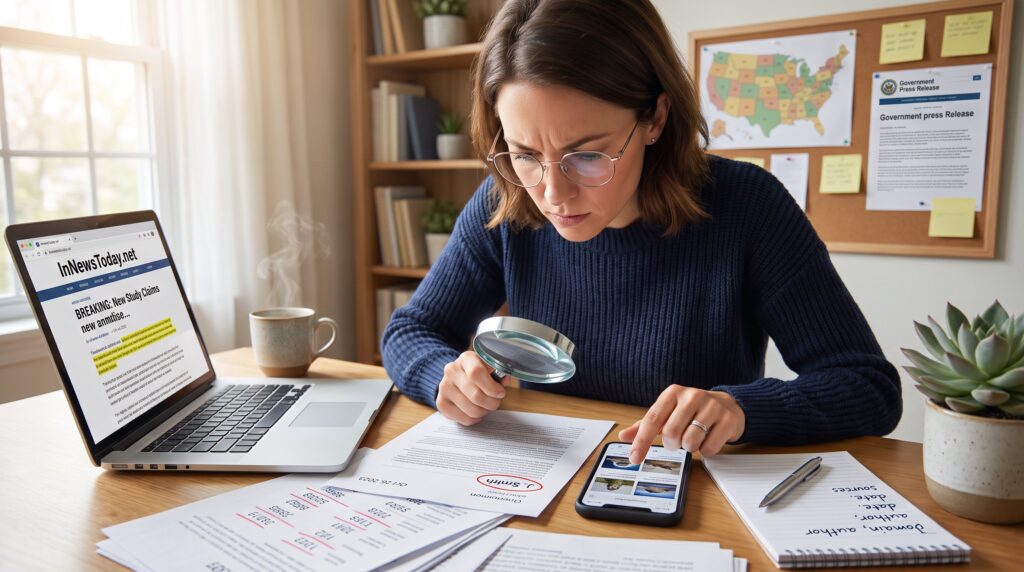
How to Fact-Check a Story From InNewsToday.net begins with skepticism and a plan. Readers who encounter a striking claim on InNewsToday.net should pause, capture the headline, author, date, images, and the story’s central assertions. This short checklist shows what to verify first, why each check matters, and which tools speed the process. The goal: decide quickly whether a story is credible, needs more corroboration, or should be treated as unverified. The steps below are practical, repeatable, and tuned for readers who want reliable answers without fluff.
Key Takeaways
- Always approach stories from InNewsToday.net with skepticism and verify domain, author credentials, date, and tone first to spot red flags quickly.
- Cross-check key claims from InNewsToday.net against credible external sources, including official documents and recognized news outlets, to confirm accuracy.
- Use reverse image search and archives to validate images and detect reused or misleading visuals in stories from InNewsToday.net.
- Confirm that multiple independent sources corroborate the information before trusting or sharing content from InNewsToday.net to avoid spreading misinformation.
- Treat every story from InNewsToday.net as unverified until primary evidence and independent confirmations are found, ensuring reliable information intake.
Why Fact-Checking Stories From InNewsToday.net Matters
Fact: Even familiar sites publish errors, promotional posts, or republished content that lacks independent sourcing.
Context: InNewsToday.net covers many verticals, from online gaming and meme coins to startups and janitorial services, which increases the chance of specialized claims that need primary evidence. A reader who assumes every piece is verified risks sharing misinformation or making poor decisions (for example, investing in a meme coin without primary filings).
Impact: When a false claim spreads, it can change market behavior, harm reputations, or waste readers’ time. One clear example: a headline asserting a celebrity-backed token can trigger rapid social traction: if untrue, late buyers lose money.
Practical takeaway: Treat each story as unverified until its key claims, data, named sources, and documents, are corroborated by independent sources. For a broad site overview and how it presents topics, consult the site guide for further context in reporting and topical coverage: site overview.
Quick First Checks: Domain, Author, Date And Tone
Fact: First checks detect obvious red flags in under two minutes.
Domain and imprint: Confirm the exact URL and look for an imprint, contact address, or editorial standards page. These signals help show whether the site operates like a newsroom or a hobby blog. Use the site’s pages about its mission and operations to spot disclosures or funding notes: the brand pages explain publishing cadence and focus, which informs expectations about verification.
Author: Search the author name and read two previous articles to confirm beat expertise. If the author has no online footprint, flag the piece. Authors with clear bios, LinkedIn profiles, or a history of reporting in the site’s niche add credibility.
Date: Check the publication date and any “updated” timestamp. Reposts of old items passed as new are common. If a claim involves fast-moving data (market prices, regulatory updates), even a few days can matter.
Tone: Watch for sensational adjectives, unverifiable absolutes, or one-sided claims without named sources. Sensational tone often replaces evidence.
Links embedded here:
- For learning how the site timestamps and updates articles, read the short guide on checking dates: article dates guide.
- To understand how the site positions breaking coverage versus opinion, see the piece on news framing: news framing note.
Cross-Check Claims With Credible External Sources
Fact: Primary and independent sources decide whether a claim stands.
Step 1, search the headline verbatim: Paste the exact headline into a search engine and compare coverage from recognized outlets, government sites, or trade associations. If established outlets or official sources report the same facts, the story is likelier to be accurate.
Step 2, seek primary documents: For regulatory, legal, or financial claims, prioritize the original documents, court dockets, SEC filings, press releases, or official datasets. Primary documents remove interpretation errors.
Step 3, check fact‑check aggregators and databases: Major fact‑checkers or claim explorers sometimes already investigated viral claims. A match there is decisive.
Step 4, evaluate source independence: If all corroboration traces back to a single press release or the story’s own anonymous source, label the claim provisional. Independent confirmation means at least two unrelated sources report the same facts.
Examples with numbers: If an InNewsToday.net story says “3,800 jobs lost,” confirm by finding a government labor release or a company filing that shows the 3,800 figure. If the number appears only in a quoted statement from an interested party, note it as an unverified claim.
Related site links:
- For strategies to locate the latest articles and their context, consult the guide on finding stories: latest stories help.
- If the story mixes quick updates and analysis, the editorial split is explained in this background piece: coverage differences.
Tools And Techniques: Reverse Image Search, Archives, And Verification Tools
Fact: Images and edits give away many false or repurposed stories.
Reverse image search: Use Google Images, TinEye, and Yandex to find where an image first appeared. If the same photo surfaced years earlier in a different context, the image is misleading. For example, a photo from 2019 reused in a 2026 political story signals a mismatch.
Archive checks: Use the Wayback Machine and other archives to view prior versions of the article. Archives reveal when text or sources were added or removed. If a critical source appears only in a later edit without explanation, treat that detail skeptically.
Metadata and geolocation: For location claims, compare the image to map satellite views or street‑view images. Matching building facades, signage, or geotag metadata can confirm a place or expose a staged claim.
Verification tools: Use claim explorers, social media context tools, and news aggregators that show source origins. Browser extensions that surface site reputation and tracking domains help reveal commercial affiliations.
Common pitfalls and a lesson learned: The writer once trusted a viral image caption and published a social post: reverse image search later showed the image was from a disaster in another country. The cost: corrected posts and lost trust. Practical warning: always run images through two independent searches and save timestamps.
Related internal links:
- If unsure how to start a site blog or interpret content production, this guide shows the publishing approach: starting blog guide.
- For step-by-step startup guidance that clarifies editorial choices, see the creator guide: creator guide.
Conclusion
Insight: Treat every InNewsToday.net story as unverified until key checks pass. Readers should confirm the domain and author, verify dates, cross‑check claims with primary sources, and validate images and edits with reverse searches and archives. When evidence is thin or all corroboration traces back to a single origin, flag the story and avoid sharing. These steps reduce the chance of amplifying errors and help readers make informed choices about news, investments, and personal decisions.