
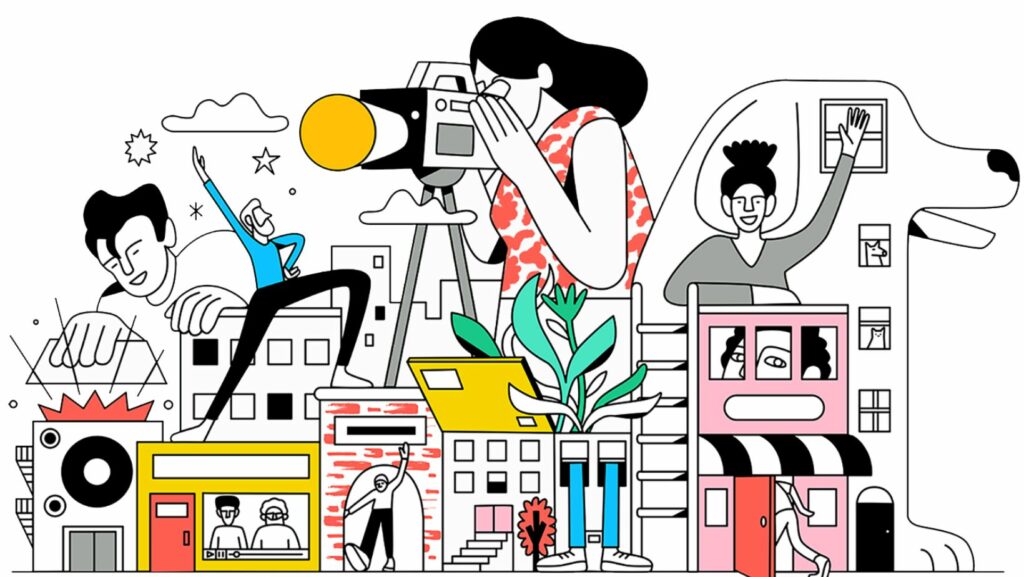
There’s this funny moment when you realize a story has already taken over the internet long before any newsroom touches it. Someone posts a blurry little clip, maybe not even meant for a big audience, and suddenly it’s everywhere.
That’s the world we’re living in now. A world where everyday creators — not reporters, not editors — give the first spark to conversations that turn into headlines.
And honestly, it makes sense. Real life shows up online before it shows up anywhere else. If you want to understand modern news, you have to pay attention to the people holding their phones, not the people sitting under studio lights.
How Creators Are Becoming the New Frontline of Breaking Stories
One of the wildest things about today’s internet is how often “breaking news” starts as a casual upload. No planning. No script. Just someone filming life happening fast, raw, and unfiltered.
Those quick clips feel different. More immediate. More human. You can almost hear the person breathing behind the camera — that shaky realness people connect with instantly.
Creators have become accidental first responders of information. Not in a heroic way, but in a “I was already here, so I recorded it” way. They show events as they unfold, long before traditional outlets even know something’s happening.
Trendsetters add another layer. Sometimes a creator posts a tiny moment — a comment, a reaction, a joke — and it detonates into a worldwide conversation for reasons no one fully understands. A simple grin, a six-second rant, a dance that happened because someone was bored. Boom: cultural ripple.
Platforms push this along. Their algorithms love immediacy and reward anything that feels alive. A perfectly produced video doesn’t stand a chance against something messy but honest.
And that’s why creators often break stories before the news does. They just move faster. Or maybe life does, and they’re the ones hitting “upload.”
What Makes Creator-Driven Stories Spread So Fast
You’d think virality would follow rules. It really doesn’t. It’s more like a spark landing in dry grass — unpredictable, a little chaotic, sometimes beautiful.
Stories spread when they make people feel something. Shock. Joy. Anger. Recognition. Even confusion. Algorithms detect that emotion faster than we do, and they amplify it ruthlessly.
Micro-communities play an underrated role here. Little clusters of viewers who obsess about specific interests — skincare, gaming, parenting, vintage fashion, whatever — pick up a piece of content and share it like it’s a secret only they understand. Then the secret escapes, and the whole internet suddenly cares.
Creators don’t always know they’re shaping the news agenda. Most aren’t trying to. But a moment shared with a couple hundred followers can snowball until journalists are quoting it on TV.
The funny part? It’s the unplanned stuff that travels the fastest. Maybe that’s the whole point: authenticity doesn’t need strategy, but strategy often tries (and fails) to replicate authenticity.
How New Creators Study What Works Online
There’s a different type of creator emerging — the researcher. The curious one. Someone who doesn’t just post, but watches closely. They dissect what works, what flops, and why some random video catches fire.
These creators binge breakdowns, analysis channels, and niche resources. They study pacing, thumbnails, storytelling beats. Some track trends like meteorologists track weather patterns.
And many look far outside their own niche to understand digital dynamics. They examine examples from communities they have nothing to do with — adult creators, gaming streamers, micro-vloggers, couple accounts, commentary channels. Anything that reveals how audiences move.
That’s why new creators often explore guides and niche breakdowns across the web, including resources like https://onlymonster.ai/blog/onlyfans-couples/. Hidden in these case studies is a map of audience behavior — what sparks, what fizzles, and what turns into viral momentum overnight.
You might call it “studying virality,” but honestly, it feels more like trying to understand people. What draws us in. What pushes us away. What makes us share something with a friend at 2 a.m.
The Role of Digital Journalism in Amplifying Creator Stories

Journalists used to dictate the news cycle. Now they chase it.
Most digital newsrooms have a tab open — TikTok, X, Reddit, Instagram — constantly refreshing to catch whatever is bubbling up. They’re scanning for signs. Memes becoming metaphors. Challenges turning into discussions. Random comments evolving into cultural signals.
A creator’s video can turn into a headline not because it was perfectly made, but because it reflects something the public is already feeling. Social media has become the world’s collective diary, and journalists read it like morning briefs.
This has blurred the old boundaries. Entertainment bleeds into news. News leans into entertainment. Commentary mixes with reporting, sometimes in ways that feel strange but strangely fitting.
Creators don’t replace journalists — but journalists depend on them. They’re the earliest clue to what matters (or what will matter in 48 hours).
Opportunities and Risks for the New Wave of Viral Creators
Going viral sounds glamorous. Sometimes it is. Sometimes it’s absolutely overwhelming.
On the bright side: visibility opens doors. Brand deals, collaborations, career pivots — whole new paths appear unexpectedly. Some creators build an entire livelihood from one moment that wasn’t even meant to be significant.
But there’s the flip side. The harsher one. When a clip spreads too far, the creator loses control of the story. Context evaporates. Strangers narrate their life for them. Privacy cracks a little — or a lot.
And the attention can feel like a flood. Exciting, yes. But also loud. Too loud for comfort.
Still, people keep creating. Maybe it’s instinct now. Or maybe sharing moments — even imperfect ones — has become part of how we connect.
What This Means for the Future of News
If you zoom out, you can already see where this is going.
More stories will start with creators, not institutions. The news will become even more decentralized, shaped by communities rather than corporations. And digital literacy — the ability to understand how information mutates online — will matter more than ever.
The news cycle is compressing. What used to unfold in days now unfolds in hours. Or minutes. It’s not necessarily better or worse. Just faster. Looser. More reactive.
And strangely enough, more personal.
Because behind every viral story now, there’s a human being. Not a logo. Not a newsroom. Someone who didn’t expect to shape the world but did — even just for a moment.
Conclusion
Creators aren’t just part of the news cycle.
They spark it. Steer it. Complicate it. Humanize it.
Journalists monitor them. Audiences trust them. Culture responds to them — sometimes instantly.
And the stories that move us now often begin with something small, unpolished, a bit messy. Something real.
Maybe that’s what makes this new era of storytelling so strange and so compelling: it’s built from ordinary moments captured by ordinary people who didn’t set out to make news at all.
Just a person. One clip.One moment worth sharing — and somehow, that’s enough to shift the world for a day.