It’s tempting to think of freight forwarding as a commodity service, book a container, get it moved, done. In practice, the forwarder is doing something closer to project management across parties who don’t share systems, don’t share incentives, and often don’t communicate with each other unless someone forces the issue. That coordination is most of the value, and it’s mostly invisible when it’s working.
The Sea-Air Option Nobody Mentions First
Most conversations about freight modes jump straight to “air or ocean,” as if those are the only two choices. Sea-Air freight splits the difference: cargo travels by sea for the bulk of the journey, then switches to air for the final stretch. It’s faster than pure ocean freight and considerably cheaper than shipping the entire route by air, and it’s the kind of option that only comes up if the forwarder you’re working with actually offers it rather than defaulting to whichever mode is easiest for them to book.
The businesses that benefit most from Sea-Air tend to be the ones stuck in the awkward middle: a delivery deadline tight enough that pure ocean freight won’t make it, but not so tight that full air freight is the only option worth considering. It’s a genuinely underused mode, largely because fewer forwarders bother offering it well, which means asking about it directly is often the only way to find out whether it’s actually on the table.
Visibility Is Not Optional Anymore
A decade ago, “where’s my shipment” was a phone call. Now it’s an expectation, and businesses that can’t answer it for their own customers end up fielding the same question repeatedly instead of the forwarder’s tracking system answering it automatically. Real-time visibility matters most on complex, multi-leg shipments, precisely because that’s where things are most likely to go quiet without anyone noticing until a delivery date slips.
Customs Isn’t Someone Else’s Problem
A forwarder who treats customs as a bolt-on rather than a core part of the service tends to create friction exactly where you can least afford it, at the border, with a shipment already in motion. Requirements shift by goods type, origin, destination, declared value and applicable duties, and HMRC’s trade guidance makes clear just how many moving parts sit behind what looks like a single form. Coordinating that alongside the physical transport, rather than handing it to a separate provider who’s never seen the shipment, removes an entire category of avoidable delay.
What Actually Causes Delays
Before a shipment moves, it’s worth being honest about a short list: is the cargo description accurate, are weight and dimensions correct, are the documents actually complete (not just assumed to be), is the transport mode genuinely right for this shipment, and are the delivery deadlines realistic given everything else on the list. Most delays aren’t dramatic failures, they’re small gaps that nobody caught because nobody was specifically checking.
Multimodal, in Practice
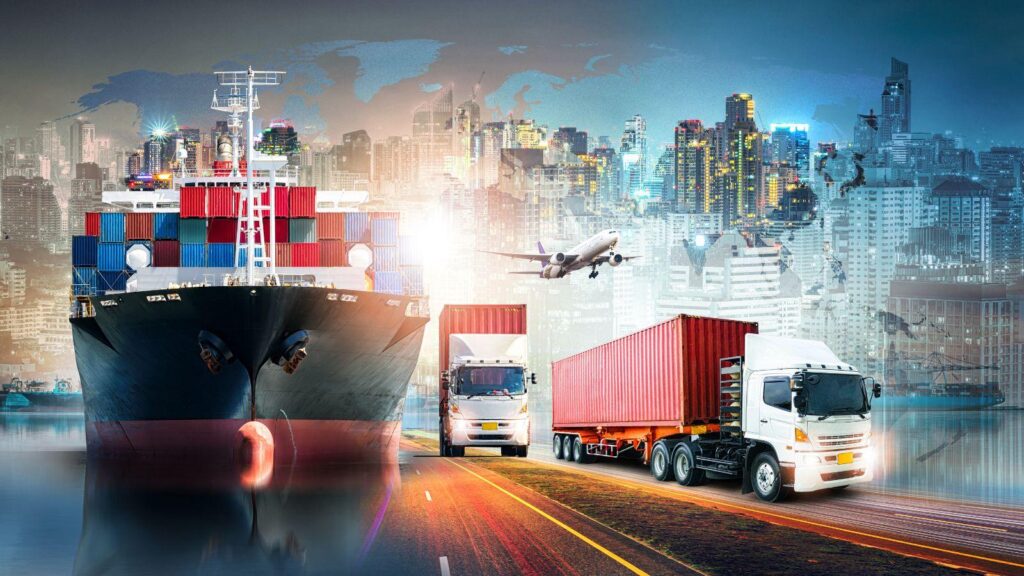
A typical international shipment might go by road to a port, by ocean for the main leg, then by rail or road to the final destination, or some other combination depending on origin and destination. Managing that through one coordinated provider, rather than three separate relationships that each only see their own leg, is where freight forwarding earns its keep. It’s less glamorous than any single mode of transport, and it’s usually the difference between a shipment that arrives on schedule and one that doesn’t.
Growth Changes What You Need
A business shipping to two markets has different needs from one shipping to fifteen. More destinations mean more carriers, more customs regimes, and more chances for something to fall through a gap that didn’t exist at smaller volumes. Future Forwarding, running operations out of both Leeds and Atlanta, structures itself around exactly that kind of scaling, which matters less for a business shipping occasionally and considerably more for one whose volumes are climbing.
Warehousing Is Part of the Same Conversation
Freight doesn’t always move directly from supplier to customer. Sometimes it needs to sit somewhere first, for consolidation, for order fulfilment, for distribution timing that doesn’t match the shipping schedule. Treating warehousing as connected to transportation rather than a separate line item tends to give businesses more control over the full supply chain, not just the parts that happen to be moving at any given moment.
The forwarder that gets all of this right rarely gets much credit for it, because when it works, nothing goes wrong, and nothing going wrong doesn’t make headlines. That’s really the point.