
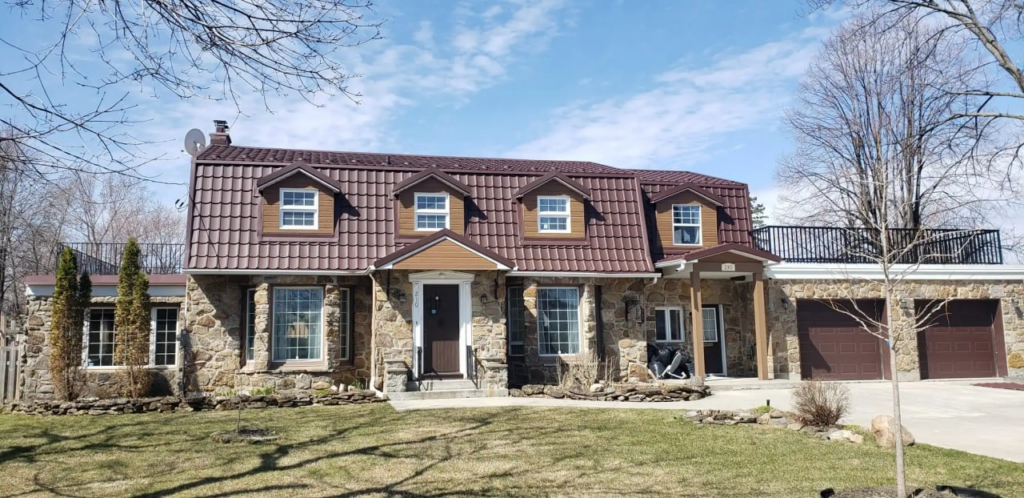
An asphalt roof gives a homeowner 15 to 30 years, depending on shingle grade and which estimate you trust. A steel standing seam roof routinely passes 50. That gap is not luck. It comes down to seven specific design decisions, and most of them stay invisible from the street.
1. The Fasteners Stay Out of the Rain
Every asphalt roof relies on thousands of exposed nails, and each one is a future entry point for water. Installers build standing seam metal roofs around a concealed clip system instead, so nothing penetrates the visible surface of the panel. No exposed fastener means no rubber washer drying out in the sun and no screw backing out after a decade of freeze and thaw. Water simply has fewer doors to knock on.
2. Steel Moves Without Complaining
Roofs expand in July and shrink in January. Interlocked vertical panels slide along their hidden clips through that whole cycle, so a 24 or 26 gauge galvanized steel roof shrugs off decades of temperature swings without stress fractures. Shingles handle the same forces by curling and cracking. Guess which approach ages better.
3. Asphalt Carries Its Own Expiry Date
Shingles start shedding protective granules from the first storm onward, and several things speed that process up:
- summer UV that slowly cooks the bitumen binder
- ice creeping along eaves and valleys every winter
- wind works the edges loose until the mat tears
Each granule that washes into the gutter exposes a little more of the asphalt underneath. Roofers in cold climates regularly see budget shingles fail at 15 to 20 years, well before the marketing photos suggest. Steel has no granules to lose.
4. Snow Leaves on Its Own
Anyone who has lived through an Ontario winter knows what a metre of wet snow weighs. Smooth vertical panels shed that load instead of holding it, and homeowners can add snow retention bars where controlled release matters, above a doorway for instance. Asphalt grips the snow, ice dams form along the eaves, and meltwater starts probing under the shingles. That probing is how most winter leaks begin.
5. The Sun Bounces Instead of Baking
Heat quietly kills asphalt. A dark shingle roof absorbs solar radiation all afternoon, and that thermal load degrades the binder year after year. Steel panels with reflective finishes send a large share of that energy back into the sky, which also trims summer cooling bills. The roof lasts longer and the air conditioner works less. Hard to argue with that trade.
6. One Roof Instead of Three
Run the numbers across a 60-year horizon and the comparison stops being close. A typical sequence looks like this:
- Year 0: install asphalt, the cheaper option upfront
- Year 20: replace it, now at higher labour rates
- Year 40: replace it again, same story
- Year 60: the neighbour’s steel roof from year 0 is still up there
Standing seam costs roughly twice as much per square foot on day one. Sounds painful. Spread across half a century it usually comes out ahead before counting a single repair bill, and some installers fit panels over an existing roof, which removes tear-off costs from the equation entirely. The Metal Roofing Alliance counted 18 percent of replacement roofs going metal in 2022, up from 3 percent in 1998. Homeowners doing the math, apparently.
7. The Warranty Tells You What the Maker Believes
Watch what manufacturers promise rather than what brochures claim. Shingle warranties run long on paper but prorate fast, so a claim filed in year 25 often pays out next to nothing. Steel standing seam systems commonly carry 50-year warranties on the panel finish. A company does not put a half-century guarantee on a product it expects to quit at year 30.
Add those seven factors together and the 30-year gap in the headline stops looking like a sales pitch. It is mostly physics, plus a fastening detail most buyers never ask about. The roof that hides its screws keeps its secrets dry.