
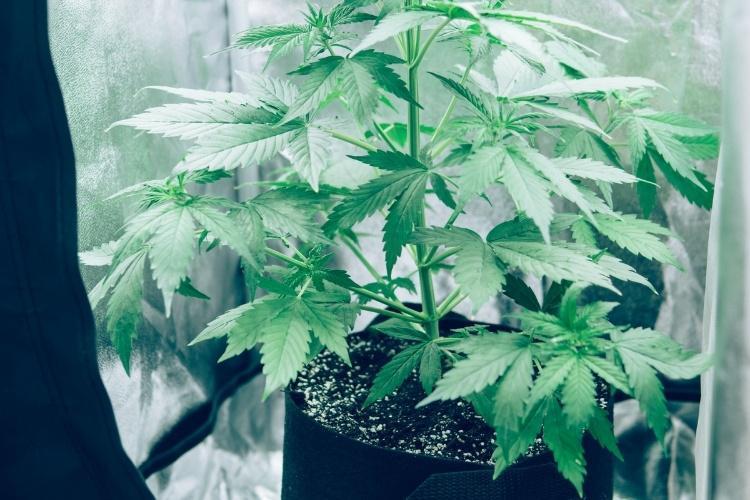
Personal cultivation requires significant financial investment. Anyone who has done some research on the costs of items needed for growing plants indoors knows the numbers add up fast, and the returns depend entirely on how carefully each dollar is spent.
Treating the growing operation like a small business tends to lead to better results than buying equipment piecemeal and hoping for the best. This article explores the economics of a home cultivation setup and reveals how growers can protect that investment.
What an Indoor Cultivation Setup Costs
Setting up an indoor grow space means recreating the sun, wind, and rain inside a room or closet. That reality drives the equipment list. A grower needs a tent or dedicated room with reflective walls and floor trays, high-powered LED or HPS lights with hangers and automated timers, inline exhaust fans and oscillating fans, carbon filters to control odor, humidifiers, temperature sensors, and either a soil or hydroponic system with liquid nutrients, pH testing kits, and pots.
A basic setup runs between $500 and $2,000. Besides the equipment cost, growers pay for electricity to run high-wattage lights for 12 to 18 hours a day, plus nutrient refills, replacement filters, and the occasional broken fan. For anyone doing the math, the cost per harvest depends on how much usable product comes out of each grow cycle.
The Hidden Cost of Wasted Space
Here is where most first-time growers lose money without realizing it. Regular, unsexed seeds produce roughly a 50/50 split between male and female plants. Only female plants produce the consumable flowers, which means half of every regular seed batch has to be identified and removed before the males pollinate the females and ruin the harvest.
Think about what that means in dollar terms. If a grower dedicates a four-plant tent to regular seeds, two of those plants will be pulled and discarded within a few weeks of sexing. The lighting, electricity, water, nutrients, and floor space spent on those two males return nothing. That is a 50% loss on the most expensive inputs in the operation, before accounting for the time spent monitoring and identifying which plants have to go.
The financial argument for careful seed selection becomes obvious once a grower runs the numbers. Every square foot of tent space and every watt of light is fixed. The only variable is what those inputs produce.
Selecting Seeds That Maximize Returns
For a grower who has already spent $1,000 or more on equipment, seed selection is the last place to cut corners. Feminized seeds are bred to produce female plants at a rate close to 99.9%, which eliminates the guesswork and the waste. Reputable seed banks such as Growers Choice publish germination guarantees and offer strains bred for specific indoor conditions, yield profiles, and flowering times. That information helps a grower plan the harvest cycle around fixed costs and avoid strains that demand equipment upgrades they had not planned for.
When choosing a feminized strain like the seeds from Grower's Choice Seeds, consider your setup. A compact 2×2 tent with a 200-watt LED calls for a shorter, indica-dominant strain that finishes fast and stays manageable. A larger tent with stronger lighting can support sativa-dominant strains that stretch more and take longer to flower. Selecting genetics that can thrive with equipment already purchased is how a grower gets the full return on the setup investment.
Ongoing Costs Growers Underestimate
Beyond the initial equipment purchase, three recurring costs eat into the economics of a home grow: electricity, nutrients, and replacement components.
Electricity is the largest ongoing expense for most indoor growers. A 400-watt light running 18 hours a day during vegetative growth and 12 hours during flowering can add $30 to $60 a month to an electricity bill, depending on local rates. Growers in higher-cost regions sometimes find that switching to newer, more efficient LED fixtures pays for itself within two or three harvest cycles.
Nutrients and pH adjusters are a smaller but steady expense. A grower who reads labels and buys in the right quantity avoids overpaying for premium bottled solutions when a basic three-part nutrient line works fine for most indoor strains.
Replacement components, including fans, filters, and timers, tend to fail at inconvenient moments. Keeping a small reserve for these repairs prevents a mid-cycle scramble that can compromise a harvest.
Tracking the Return on a Home Grow
Growers should treat their operation like a business. It's advisable to keep basic records including total equipment cost, monthly utility expense, seed and nutrient purchases, and yield per harvest in grams or ounces. Dividing total costs over a year by total yield produces the cost per gram, which lets a grower compare their home operation to retail or dispensary pricing.
For many growers, that number turns out to be significantly lower than retail after the first few cycles, especially once the fixed equipment costs are spread across multiple harvests. The economics improve further when a grower gets consistent yields from each cycle.
Final Thoughts
Personal cultivation requires careful planning and avoiding shortcuts. The equipment investment is significant, and every decision after that, from lighting hours to strain selection, determines whether the setup pays for itself or drains money each month. Tracking costs, using space wisely, and selecting suitable seeds tend to bring the cost per gram down to a point where home cultivation delivers a reasonable return on the initial outlay.