
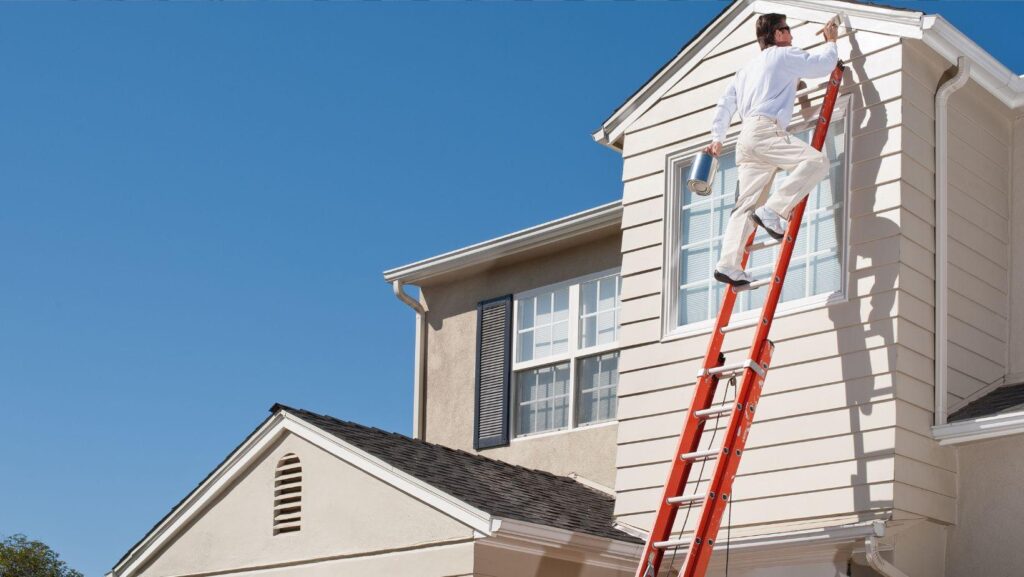
Your home's outside layer does more work than you might give it credit for. It takes the sun, the rain, the freeze and thaw, and years of weather most of us stop noticing. So when the paint starts to fade, crack, or peel, it is not just a looks problem. A good exterior house painting job protects the surfaces beneath and prevents small issues from becoming expensive repairs. Done well, it can also make an older home feel new again.
The trouble is that painting the outside of a house is a bigger project than most people expect. There is prep, timing, colour, product choice, and the honest question of whether to do it yourself or bring in a crew. This guide walks you through it all, so you can plan the work with confidence and avoid mistakes that cost people time and money.
Before we get into the how, it is worth saying that not every exterior job is a weekend project. For larger or taller homes, many owners weigh their options against a quote from a team that handles professional exterior house painting, simply to understand what a complete job involves before deciding what to take on themselves. With that context in place, here is everything you need to plan the work well.
Why the Outside of Your House Matters More Than You Think
Paint is not only decoration. On the exterior, it is the first line of defence against moisture. When that barrier breaks down, water finds its way into wood, stucco, and trim, and that is where rot, warping, and mould begin. Repainting on a sensible schedule keeps that shield intact, which is far cheaper than replacing damaged boards later.
There is a money side too. Curb appeal is a real thing, not a cliché. A tired, patchy exterior makes a house look neglected before anyone reaches the front door. A clean, well-chosen colour scheme does the opposite. Whether you plan to sell soon or stay for decades, the way your home presents itself to the street affects how you feel about it and how others value it.
How Often Should You Paint Your House Exterior?
This is one of the most common questions homeowners ask, and the honest answer is: it depends on your siding. As a rough guide, wood siding usually needs repainting every three to seven years, while properly applied paint on stucco can last five to six years or more. Aluminum siding often lasts for around five years, and fibre cement can go the longest, sometimes ten to fifteen years.
Rather than counting years, watch the paint itself. Fading, chalky residue on your hand when you touch the wall, hairline cracks, and peeling edges are all signs that the finish is giving up. In a climate with hard winters and humid summers, the wear tends to show sooner, so inspecting your exterior each spring is a smart habit.
What Is the Best Time of Year to Paint a House Exterior?
Timing matters more for exterior work than almost anything else, because paint needs the right conditions to cure. The best time to paint a house exterior is during dry, mild stretches when daytime temperatures sit comfortably above freezing and overnight temperatures do not crash. For much of Canada, that means late spring through early fall.
Two enemies work against you: moisture and temperature swings. Paint applied to a damp surface will not bond well, and paint that cures in cold or wildly changing temperatures can crack or peel early. You also want to avoid painting in direct, blazing sun, which makes the surface too hot and causes the coat to dry before it can level out properly. A run of stable, dry days with a bit of cloud cover is close to ideal.
How Do You Prep a House for Exterior Painting?
Ask any experienced painter what separates a job that lasts from one that fails, and they will point to prep. Exterior paint prep is unglamorous, but it is where the durability comes from. Skipping it is the single most common reason a fresh coat starts peeling within a year or two.
Clean the surface first
Dirt, pollen, mildew, and old chalky paint all stop new paint from sticking. Washing the exterior, whether by hand or with a pressure washer used carefully, gives you a clean base. If you wash, let everything dry fully before moving on, since trapped moisture undermines the whole job.
Scrape, sand, and repair
Loose and flaking paint has to come off. Scrape it back to a sound edge, then sand rough spots smooth. This is also the moment to fix what you find: fill cracks, replace rotten trim, and reseal gaps around windows and doors with quality caulk. Painting over damage only hides it for a season.
Prime the bare and problem spots
Primer for exterior surfaces is not optional on bare wood, patched areas, or stains that bleed through. Primer seals the surface, evens out absorption, and helps the topcoat grip. On a full colour change or a weathered surface, a proper primer coat makes a visible difference in the finished result.
Protect everything you are not painting
Cover plants, walkways, light fixtures, and windows. Tape off trim lines. Good masking is slow and a little tedious, but it is far faster than cleaning overspray off a patio or a car afterward.
Choosing Exterior Paint Colours That Age Well
Colour is the fun part, and also where regret happens. A shade that looks perfect on a small chip can feel very different across an entire wall in full daylight. The safest approach is to buy sample pots and paint large swatches on different sides of the house, then look at them in morning light, midday sun, and evening shade before committing.
When picking exterior paint colours, think about what you cannot change. Your roof, brick, stone, and permanent fixtures all have undertones that your paint has to live beside. Neutrals with warm or cool undertones tend to stay likeable for years, while very trendy colours can date quickly. It also helps to glance at your street: you want your home to stand out gently, not clash with everything around it.
Siding and Trim Painting: Getting the Details Right
A great exterior job is really several smaller jobs working together. The broad siding sets the tone, but the trim, doors, and accents are what make it look finished. Siding and trim painting usually calls for different sheens: a flatter finish on large siding surfaces to hide imperfections, and a higher sheen on trim and doors for durability and a crisp, clean line.
Order matters here. Painters generally work from the top down and from large areas to small details, saving the crisp trim lines for last. Rushing the cut lines where siding meets trim is a giveaway of a sloppy job, so this is the stage that rewards patience most.
How Long Does Exterior Paint Last, and How to Make It Last Longer
With good prep, quality paint, and a proper application, an exterior finish can hold up for the better part of a decade, though the exact lifespan depends on your siding, your climate, and how much sun and weather each wall takes. South and west faces usually weather faster than sheltered ones.
You can stretch that lifespan with simple upkeep. Rinse the walls once a year to clear dirt and mildew, touch up small chips before they spread, keep gutters working so water is not constantly running down the siding, and trim back shrubs that trap moisture against the house. None of it is dramatic, but together it buys you extra years before the next full repaint.
Should You Hire a Professional or DIY Your Exterior Painting?
This is the decision that shapes the whole project. Painting the outside of a house yourself can save on labour, and for a small bungalow with easy access, it is a reasonable weekend-and-then-some undertaking. But be honest about the scale. Exterior work often means ladders, multi-storey reach, careful prep across a large surface, and days of dry weather lined up in a row.
The professional-painters-vs-DIY question really comes down to three things: height and safety, time, and finish quality. Working two or three storeys up on a ladder is genuinely risky if you are not used to it. A full exterior can eat weeks of your weekends. And a trained crew simply lays down a more even, longer-lasting finish because they do this every day and have the equipment for it.
If your home is large, tall, or heavily weathered, hiring a crew is usually the smarter call. This is where experience shows, and it is worth looking at teams that specialize in full exterior work for the prep, safety gear, and finish that a big job demands. A good crew will assess your siding, handle the repairs most people miss, and stand behind the result, which often makes the cost worth it once you factor in the time and risk you avoid.
How Much Does Exterior House Painting Cost?
Cost is the natural next question, and it varies widely, so treat any single number with caution. The main drivers are the size of your home, the number of storeys, the condition of the existing surfaces, the amount of prep and repair needed, the quality of paint chosen, and local labour rates. A large two-storey home with peeling paint and rotten trim will cost far more than a small, well-maintained bungalow.
Rather than chasing a headline figure, get a few detailed written quotes that spell out prep, number of coats, product, and warranty. That lets you compare like with like. The cheapest bid is not always the best value, since a low price often means less prep, and less prep means a coat that fails sooner.
Understanding Your Siding: It Changes Everything
Before you buy a single can, it helps to know what your house is actually made of, because the material dictates the product, the prep, and the lifespan. Painting over the wrong surface with the wrong paint is a fast route to failure, no matter how careful you are with the rest of the job.
Wood siding
Wood is the classic surface and the most demanding. It expands and contracts with moisture, so it needs flexible, breathable paint and diligent caulking. Wood also shows rot and insect damage, which must be repaired before painting. It rewards good care with a beautiful finish, but it asks for the most attention over its life.
Stucco
Stucco is porous and textured, which means it drinks paint and needs products made to breathe so trapped moisture can escape. Cracks are common and should be filled before painting. Because of the texture, stucco often takes more paint than a smooth wall of the same size, which affects both time and material.
Aluminum and vinyl
Metal and vinyl sidings can be painted, but they demand the right primer and paint formulated to bond and to handle expansion. With vinyl in particular, you generally cannot paint it a much darker colour than the original, since dark shades absorb heat and can warp the panels. This is a detail many DIYers learn the hard way.
Fibre cement
Fibre cement is durable and holds paint well, which is part of why it has grown popular. It still needs clean, sound surfaces and quality paint, but it tends to offer the longest stretches between repaints, which is worth knowing when you weigh the upfront cost against the years of service.
Common Exterior Painting Mistakes to Avoid
Knowing what goes wrong is often more useful than knowing what goes right. A handful of mistakes account for most disappointing exterior jobs, and every one of them is avoidable with a little foresight.
The first is painting over a dirty or damp surface, which guarantees poor adhesion no matter how good the paint is. The second is skimping on prep to save time, which trades a few saved hours now for a failed finish later. The third is ignoring the weather and painting in conditions that are too cold, too hot, or too humid for the paint to cure properly. The fourth is buying the cheapest paint available, which fades and breaks down faster and brings the next repaint forward. And the fifth is underestimating the scale of the job, then rushing the final coats to be done, which shows in every uneven line.
None of these requires expert skill to avoid. They require patience and a willingness to do the boring steps properly, which is exactly what separates a finish that lasts from one that embarrasses you within a year.
Weather and Exterior Paint: A Closer Look
Because weather affects exterior paint so heavily, it is worth understanding a little more about why. Paint cures through a chemical and physical process that depends on temperature and moisture. Too cold, and the paint cannot form a proper film, leaving it weak and prone to peeling. Too hot or too sunny, and the surface layer skins over before the coat can level and bond, trapping problems underneath.
Humidity plays its own role. High moisture in the air slows drying and can leave a finish that never fully hardens the way it should. This is why experienced painters watch not just the day's forecast but the days on either side of the job, since a surprise overnight rain or a cold snap right after painting can undo careful work. Respecting the weather is not fussiness. It is the difference between a coat that lasts for years and one that starts failing by the next season.
A Simple Exterior Painting Checklist
If you take one thing from this guide, let it be a sense of sequence. A repainting a house exterior project goes smoothly when you work in order rather than jumping around.
First, inspect and choose your timing around dry, mild weather. Second, wash the whole surface and let it dry. Third, scrape, sand, repair, and caulk. Fourth, prime bare and patched areas. Fifth, protect everything you are not painting. Sixth, paint siding from the top down, then finish trim and doors last. Seventh, clean up and plan the yearly maintenance that keeps it all looking sharp.
Quick Answers to Common Exterior Painting Questions
A few questions come up again and again, so here are short, practical answers to round things out before you start.
Do I really need two coats?
In most cases, yes. A single coat rarely gives even coverage or full protection, especially over a colour change or a weathered surface. Two coats are the standard for a reason, and it is a poor place to cut corners if you want the finish to last.
Can I paint over old paint?
You can, as long as the existing paint is well bonded. Any loose or peeling areas must be scraped and sanded first, and bare spots need priming. Painting fresh coats over failing paint just means the new layer fails along with the old one.
How long before I can expect the paint to fully cure?
Paint is usually dry to the touch within hours, but full curing, where it reaches its final hardness and durability, can take days or even weeks depending on conditions. This is why a stretch of stable weather right after painting matters as much as the day itself.
Is it worth painting an old house, or should I replace the siding?
If the siding is fundamentally sound, painting is almost always the far cheaper route to a refreshed look and renewed protection. Replacement only makes sense when the material itself is failing widely. For most homes, a quality repaint delivers most of the visual benefit at a fraction of the cost.
The Payoff of Doing It Right
Painting the outside of your home is one of those projects that pays you back twice, once in protection and once in pride, every time you pull into the driveway. The homeowners who end up happiest are rarely the ones who moved fastest or spent the least. They are the ones who respected the prep, waited for the right weather, chose colours they would still like in five years, and were honest about what they could safely handle from the top of a ladder. Get those four things right, and the finish takes care of itself for years.
If the job turns out to be bigger than a weekend or taller than you are comfortable reaching, there is no shame in handing the ladders and the risk to someone who does this every day. A crew like Home Painters Toronto can handle the prep most people skip, work the heights safely, and leave you with a finish built to last, which often makes the cost worth it once you weigh it against your time and peace of mind. Whether you roll up your sleeves or bring in help, a well-planned exterior is one of the most satisfying upgrades a home can have.