
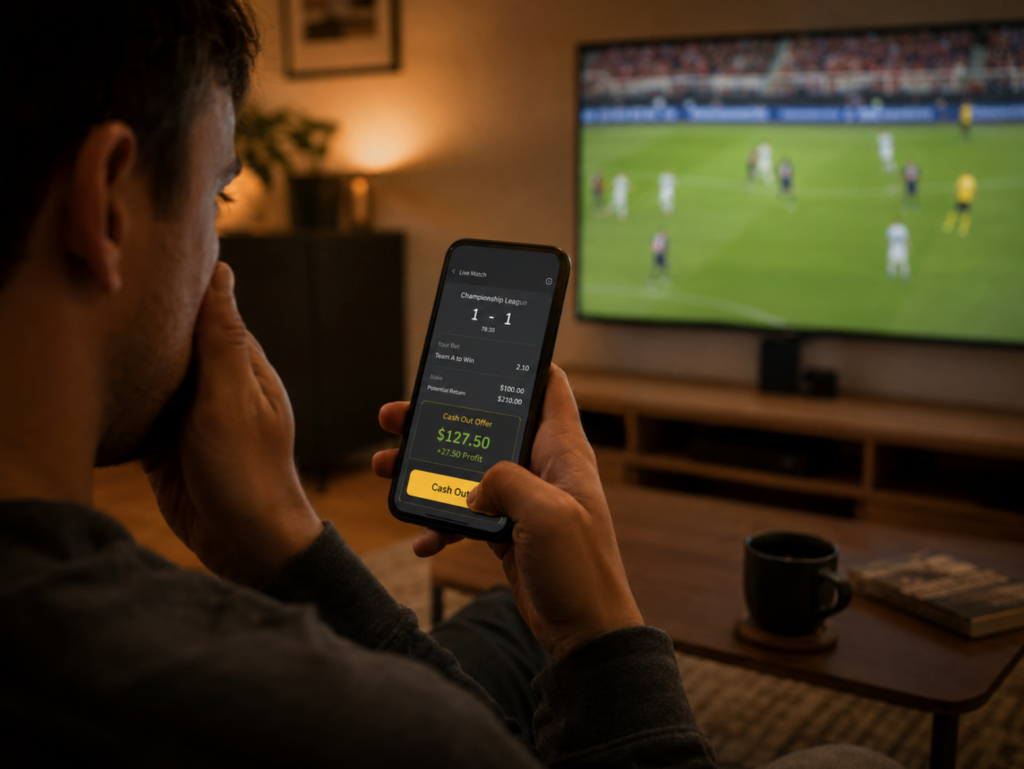
The cash out button has a way of appearing when the room gets quiet. A match is still going, the bet is still alive, and the player is staring at a number that keeps changing. Take it now, and there is something safe in hand. Leave it alone, and the full win may still come.
That small button can turn a calm bet into a full argument inside the head. One side says, “Take the money.” The other side says, “Wait a little longer.” This is the panic moment. It is not always about greed. Sometimes it is about fear, hope, and the strange feeling of being close to a good result.
The Button Changes the Mood
A normal bet has a simple shape. The player picks a market, places a stake, then waits for the result. Cash out changes that shape. It gives the player another choice before the end.
That can be useful. A player may take a smaller return when the match looks risky. A team may be leading, but pressure is building. A red card may change the game. A star player may leave the pitch. Cash out can help the player leave before the match turns.
Still, the button also adds stress. The player is no longer just watching the game. They are watching the offer rise and fall. A corner, a free kick, or one strong attack can make the number move. The match becomes less peaceful.
A good player treats cash out as a tool, not a rescue plan. It should be part of the plan before the bet starts, not only a scared move during the match.
Hope Can Sound Very Smart
Hope has a loud voice during a live bet. It can make a player believe the game will hold steady, even when the signs are changing. A team may be tired, but hope says they can hang on. A striker may miss chances, but hope says the next one will land.
Fear has its own voice too. It can make a player cash out too soon, even when the bet still has a fair chance. That is why the panic moment feels so tense. Both feelings can sound right at the same time.
The better habit is to think early. A player can decide before the match what would make them cash out. It may be a red card, an injury, a team losing control, or a live price that no longer feels fair. This turns the button from a panic switch into a planned choice.
A Plan Helps the Hand Stay Still
A calm plan makes the cash out button less scary. A player using regulated sports betting Alberta markets, or any clear betting space, should know the stake, the risk, and the reason for the bet before the game begins. That way, the hand is not ruled by one loud minute.
Small stakes also help. When the money is kept low, the player can think more clearly. The bet becomes sustainable entertainment, not a heavy weight on the chest.
Cash out should not be used just because the heart is beating fast. It should answer a real match change. If nothing has changed except fear, the player may need a breath more than a button.
Near Wins Leave Strange Feelings
Cash out can feel good when it saves a bet from falling apart. It can also feel painful when the full bet wins after the player leaves early. That feeling can stay with people for days.
The truth is simple. No one knows the final whistle before it comes. A cashed out bet is not foolish just because the full result later wins. It may have been the right choice with the facts at that time.
This is where many players need kindness toward themselves. Betting is full of maybes. A smart choice can still lead to a smaller return. A risky choice can still work by chance. One result does not always prove the choice was good or bad.
Small Bets Make Choices Easier
A smaller stake makes the cash out moment easier to handle. The player is less likely to panic because the bet does not carry too much weight. This gives more extended entertainment value because the whole match can be watched with a clearer head.
Good betting spaces should treat players like valued guests. They should show clear cash out terms, fair prices, and simple rules. The player should know that the cash out offer can change fast and may not always be open.
The cash out button is only a choice. It should not control the player. It should not turn every match into a fear test.
The player stays in charge by setting a budget, choosing small stakes, and knowing the plan before kickoff. Hope can sit nearby, and fear may still speak, but neither one should drive the whole bet. The smartest moment may be knowing when to press, when to wait, and when to let the game go.