
Summary
Dollar-pegged digital assets have solidified their role as a necessary conduit connecting traditional fiat banking with decentralized blockchain networks. Within the digital card room sector, asset options like USD Coin (USDC) resolve one of the most prominent obstacles to digital currency adoption: continuous price volatility. This article evaluates how USDC functions in modern crypto poker environments, why it appeals to players prioritizing financial consistency, and how it aligns with the rapidly maturing digital asset regulatory framework in the United States.
Introduction
The expansion of the digital currency ecosystem across the United States has highlighted a persistent friction between financial innovation and operational stability. While decentralized networks enable lightning-fast and highly flexible payment rails, sudden asset price drops or spikes can severely complicate day-to-day capital management. Stablecoins were specifically engineered to bridge this gap, maintaining a flat, predictable value while completely retaining the underlying transaction speeds of the blockchain.
For online card rooms—where users are constantly executing deposits, initiating cash-outs, and managing active balances—financial predictability is vital. Modern platforms are heavily leaning into these pegged assets to give users the best of both worlds: the friction-free utility of blockchain architecture alongside entirely predictable financial outcomes.
Understanding the Role of USDC
USDC is a fully backed stablecoin designed to maintain a strict one-to-one valuation with the United States dollar. Unlike speculative altcoins, its primary function is strictly operational and transactional rather than investment-driven.
In a gaming ecosystem, this asset serves as a digital cash alternative. It empowers players to accurately calculate tournament buy-ins, track performance metrics, and measure cash game winnings without absorbing any exposure to broader crypto market corrections. This structural predictability makes it highly useful in regulatory-driven, compliance-focused landscapes like the US market.
Capital Predictability and Bankroll Clarity
The most distinct operational advantage of using USDC at the tables is the absolute transparency it brings to bankroll management. Players can track their trajectory based entirely on their skill and card variance rather than the independent price shifts of the digital currency they hold.
This fixed value directly optimizes:
- Consistent and precise stake selection.
- Straightforward, uncomplicated performance tracking.
- The elimination of psychological stress tied to sudden market flash crashes.
- More accurate, long-term financial planning.
For individuals transitioning from classic fiat-based card rooms, stablecoins provide a seamlessly familiar financial reference point.
Processing Efficiency and Velocity of Capital
Because USDC moves across high-speed blockchain networks, transaction settlement times are drastically accelerated compared to legacy banking channels. Account deposits and withdrawals bypass the multi-day holding periods typical of standard credit cards or traditional wire transfers.
This rapid processing speed maximizes active player liquidity and eliminates unnecessary downtime between sessions. From an infrastructure viewpoint, this integration perfectly reflects wider fintech trends pushing toward universal, real-time or near-real-time settlement systems.
Public Ledgers and Auditable Transactions
Every single USDC movement is indexed on an immutable public blockchain. This empowers users to independently verify the exact state of their payments on-chain, eliminating the need to wait for manual confirmation from customer support.
While the actual gameplay and hand histories remain securely off-chain, this level of payment visibility ensures clear tracking of capital and drastically minimizes transaction-related disputes.
Operational Security and Self-Custody
Despite maintaining a flat fiat valuation, stablecoins require the exact same storage and security measures as any other digital asset. Users must remain vigilant in practicing safe wallet hygiene, securing private seed phrases, and carefully auditing destination addresses before confirming transfers.
While a pegged asset completely insulates a player from market volatility, robust operational security remains a critical, non-negotiable responsibility for anyone participating in decentralized payment networks.
The United States Compliance Landscape
Stablecoin infrastructure operates within a highly sophisticated, rapidly evolving federal regulatory environment in the United States, marked by comprehensive frameworks like the GENIUS Act. Even though they successfully mirror the value of the US dollar, these assets are strictly bound to digital asset oversight, explicit reserve requirements, and anti-money laundering (AML) reporting controls.
Operators who integrate stablecoins must carefully balance localized gaming laws with federal financial regulations, illustrating the highly hybrid compliance models that modern platforms must navigate.
Changing Player Behavior and Asset Adoption
The widespread availability of USDC has noticeably changed how enthusiasts interact with their gaming finances. Bypassing the anxiety of market volatility naturally fosters more structured risk management and clearer, objective decision-making at the tables.
This behavioral shift matches wider transactional patterns across the country, where stablecoins are increasingly relied upon as efficient payment tools rather than speculative trading vehicles.
A Practical Proving Ground for Applied Web3
Online gaming represents an ideal, high-velocity environment for testing real-world blockchain applications. Stablecoins prove that digital assets can successfully mature into utility-first solutions that prioritize financial clarity alongside technological efficiency.
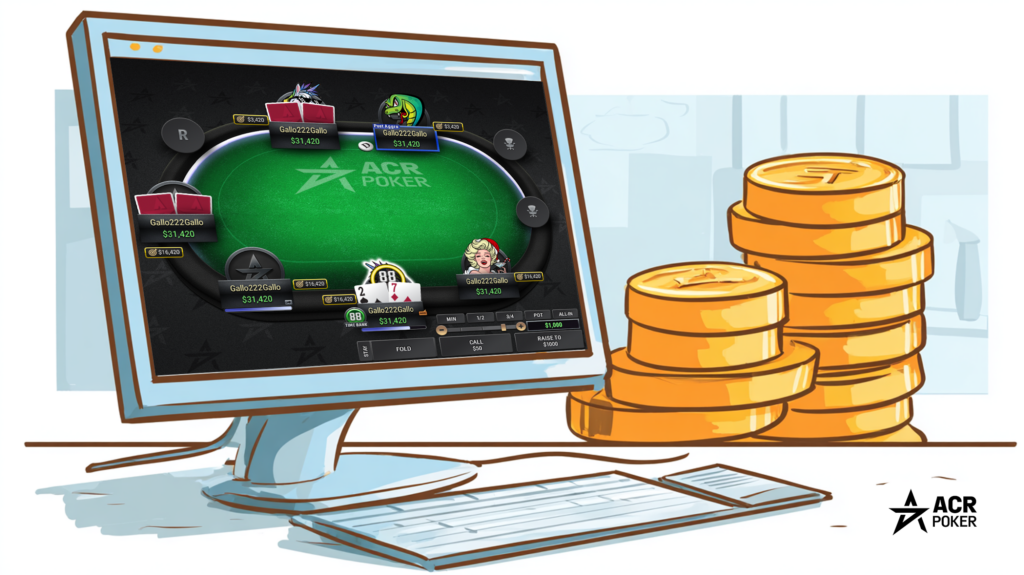
Industry-leading platforms like ACR Poker showcase this operational evolution perfectly, demonstrating how digital payment models can be successfully integrated into major consumer applications without requiring users to absorb speculative financial risks.
Conclusion
The integration of USDC highlights how stablecoins can successfully normalize the use of digital currencies in everyday digital commerce. By blending price predictability with the speed of blockchain infrastructure, they solve the historical hurdles of volatility and financial tracking. As the digital asset framework in the United States continues to institutionalize, stablecoins will undoubtedly play a cornerstone role in shaping the future of global gaming payments.